

TL;DR:
- Reflecting on previous lessons enhances retention and helps break through language learning plateaus.
- Using story-based learning combined with self-assessment, recording, and targeted tasks builds fluency and pronunciation skills.
- Matching reflection methods to specific language goals increases effectiveness and maintains motivation.
You've been studying consistently for months. You know the basics, you can follow a conversation, and yet something feels stuck. Progress has slowed to a crawl, and more vocabulary drills don't seem to fix it. The truth is, most intermediate learners hit this wall not because they're practicing too little, but because they're not reflecting enough on what they've already encountered. Reflection, especially when paired with story-based learning, is one of the most underused tools for breaking through a plateau. This article walks you through research-backed reflection ideas that will sharpen your vocabulary, grammar, and pronunciation in ways that feel engaging rather than exhausting.
Table of Contents
- Why reflect on your language learning? The research-backed advantages
- Top 5 reflection ideas to try after every story exercise
- Which reflection idea fits best? A comparison for different learning goals
- Overcoming plateaus: Pro-tactics and pitfalls for intermediate learners
- Why stories and reflection matter more than drills: A fresh perspective
- Take your language learning further with guided story-based reflection
- Frequently asked questions
Key Takeaways
| Point | Details |
|---|---|
| Reflection boosts progress | Regularly reflecting after story-based exercises accelerates vocabulary, grammar, and pronunciation gains. |
| Match ideas to your goal | Choose self-recording for pronunciation, journaling for vocabulary, and rubrics for grammar for targeted improvement. |
| Context beats drills | Story-driven reflection, not just grammar drills, breaks intermediate plateaus and keeps learning motivating. |
| Digital tools multiply effects | Using digital storytelling apps or workflows maximizes engagement and feedback for faster results. |
Why reflect on your language learning? The research-backed advantages
Reflection is more than just reviewing your notes. It's the process of stepping back after a learning session and asking yourself: What did I notice? What confused me? What would I say differently now? This kind of active self-examination builds the self-awareness that separates learners who plateau from those who keep growing.
Research consistently shows that reflection increases retention of new language features. When you pause to think about why a sentence worked or how a new word was used in context, you force your brain to process it at a deeper level. That deeper processing is what turns passive recognition into active recall, which is the foundation of real fluency. Combining active learning methods with regular reflection creates a feedback loop that accelerates progress significantly.
Stories make this even more powerful. When vocabulary appears inside a compelling narrative, it carries emotional weight and context. You remember the word betrayal because it described a character's downfall, not because it appeared on a flashcard. Story-based vocabulary gains are measurably stronger than gains from decontextualized word lists, because the brain encodes meaning alongside memory.
Here's a quick look at the core benefits of reflective practice for language learners:
- Self-awareness: You identify patterns in your errors rather than repeating them blindly.
- Deeper engagement: Reflecting on a story keeps you mentally active, not passive.
- Gap recognition: You notice what you almost understood, which is where growth happens.
- Pronunciation sensitivity: Listening back to yourself reveals habits you can't catch in real time.
- Motivation: Seeing your own progress documented keeps you going when it feels slow.
Statistic spotlight: Digital storytelling significantly improves listening comprehension, engagement, and vocabulary compared to traditional instruction, making it one of the most evidence-supported formats for intermediate learners.
The combination of story context and deliberate reflection is not a soft, feel-good idea. It's a well-supported approach that gives you both the input and the metacognitive tools to use it effectively.
Top 5 reflection ideas to try after every story exercise
Once you understand why reflection matters, let's look at the most effective ways to actually do it after your story sessions. These five techniques are grounded in research on reflective practices including rubrics, journals, post-story review, and recording, and each one is easy to build into your existing routine.
-
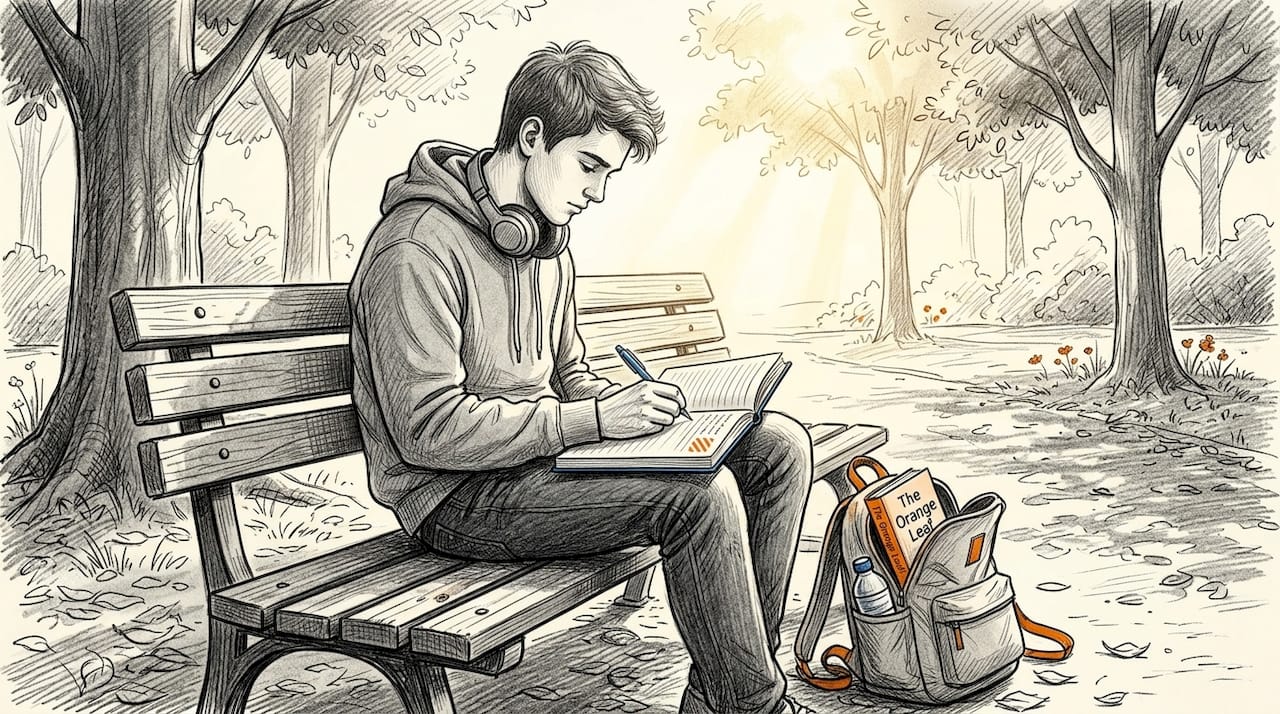
Story journaling. Right after finishing a story, write 3 to 5 sentences in your target language summarizing what happened. Don't translate. Use the words and structures you just encountered. This forces active recall and helps you internalize new vocabulary naturally. Check your story-based learning workflow to see how journaling fits into a full session.
-
Self-assessment rubrics. Create a simple rubric with categories like vocabulary range, grammar accuracy, and fluency. After each story session, rate yourself honestly on a scale of 1 to 5. Over time, you'll spot trends and know exactly where to focus next.
-
After-speaking checklists. After a speaking exercise, run through a short checklist: Did I use at least two new words from the story? Did I self-correct any grammar errors? Was my pacing natural? These practice revision tips help you stay intentional rather than just going through the motions.
-
Recording and listening review. Record yourself retelling a story or answering comprehension questions, then listen back. You will hear things you never notice while speaking, from mispronounced vowels to repeated filler words. This is one of the highest-leverage reflection tools available to you.
-
Grammar noticing tasks. Pick one grammar structure from the story, such as the subjunctive or a specific tense, and find three examples of it in the text. Then write two new sentences using the same structure. This targeted noticing builds grammatical intuition without dry drilling.
Pro Tip: Use your phone's voice memo app to record yourself immediately after reading a story, while the language is still fresh. Listen back the next day with fresh ears. The gap between what you intended to say and what you actually said is your most honest feedback.
Which reflection idea fits best? A comparison for different learning goals
With several reflection ideas in mind, it's important to see which one best supports your next goal. Not every technique works equally well for every skill area. Task repetition, story retelling, and story grammar instruction each target different outcomes, so matching your method to your goal saves time and energy.
Here's a comparison to help you decide:
| Reflection method | Best for | Why it works |
|---|---|---|
| Story journaling | Vocabulary, fluency | Forces active word use in context |
| Self-assessment rubrics | Grammar, overall progress | Builds metacognitive awareness |
| After-speaking checklists | Fluency, pronunciation | Keeps speaking sessions intentional |
| Recording and listening review | Pronunciation, fluency | Reveals real-time speech habits |
| Grammar noticing tasks | Grammar, vocabulary | Connects rules to authentic examples |
A few guidelines to help you choose:
- If vocabulary is your priority, start with story journaling and grammar noticing tasks. Both require you to retrieve and use new words actively.
- If pronunciation is your focus, recording and listening review is non-negotiable. Pair it with conversation practice strategies for maximum impact.
- If grammar is your weak point, self-assessment rubrics and grammar noticing tasks work best together. They make patterns visible.
- If fluency is the goal, after-speaking checklists combined with story journaling build the confidence and automaticity you need.
You can also explore story writing exercises to combine several of these methods into one productive session. Writing a short story response, for example, touches vocabulary, grammar, and fluency all at once.
Overcoming plateaus: Pro-tactics and pitfalls for intermediate learners
Now that you can match reflective techniques to your target skill, here's how to apply them strategically as an intermediate learner.
The intermediate plateau is real, and it's frustrating precisely because you feel like you should be improving. You understand most of what you read. You can hold a basic conversation. But something isn't clicking at the next level. Reflection breaks this cycle by making your learning visible to yourself.
One smart tactic is to vary how you use stories based on your current level. Lower intermediates benefit from repeating the same story multiple times, focusing on different elements each pass: first for comprehension, then for vocabulary, then for grammar. Higher intermediates progress faster by working with a wider variety of stories, including humorous or unexpected ones that push them into unfamiliar territory. This mirrors what research shows about story-based reading outperforming traditional drills for engagement and fluency development.
"A blended approach that combines contextual story engagement with targeted reflection is more effective than either grammar drilling or passive reading alone."
Here are the most common pitfalls to avoid:
- Over-relying on grammar drills. Drills build recognition, not production. If you can spot an error but can't construct a sentence naturally, you need more story-based output.
- Skipping self-assessment. Without honest self-evaluation, you repeat the same mistakes with confidence. Rubrics and checklists keep you accountable.
- Ignoring story context. Studying vocabulary in isolation strips away the very cues that make words memorable. Always tie new words back to the story where you found them.
- Rushing past speaking exercises. Speaking out loud, even imperfectly, is where fluency is built. Check out speaking practice advantages for more on why this matters.
Pro Tip: If you're learning more than one language, the reflective habits you build in one carry over to the others. The benefits of learning multiple languages through story-based methods are compounded when you reflect consistently across all of them.
Why stories and reflection matter more than drills: A fresh perspective
Here's an honest take: most learners cling to grammar drills because they feel productive. You fill in blanks, check your score, and feel like you accomplished something. But recognition is not the same as communication. You can ace a fill-in-the-blank exercise and still freeze when someone speaks to you naturally.
Story-based reflection flips this. When you read a story and then reflect on it, you're not just checking answers. You're building a mental model of how the language actually works in use. Extensive story reading breaks through the intermediate plateau in ways that intensive grammar study simply cannot replicate, because it gives you volume, variety, and emotional engagement all at once.
Personal reflection after a story also creates stickier vocabulary. You remember words that surprised you, moved you, or confused you. That emotional trace is a memory anchor that no flashcard can manufacture. And when you reflect on your own speaking recordings, you start to develop an ear for what sounds native-like, which is a skill that transfers directly to real conversations.
The most effective approach combines rigorous reflection with enjoyable stories. Explore writing for fluency as one more way to make reflection feel creative rather than clinical. When learning is both rigorous and enjoyable, you show up consistently. And consistency is what actually moves the needle.
Take your language learning further with guided story-based reflection
Ready to put these ideas into practice? Here's how you can get extra support for your reflection journey.
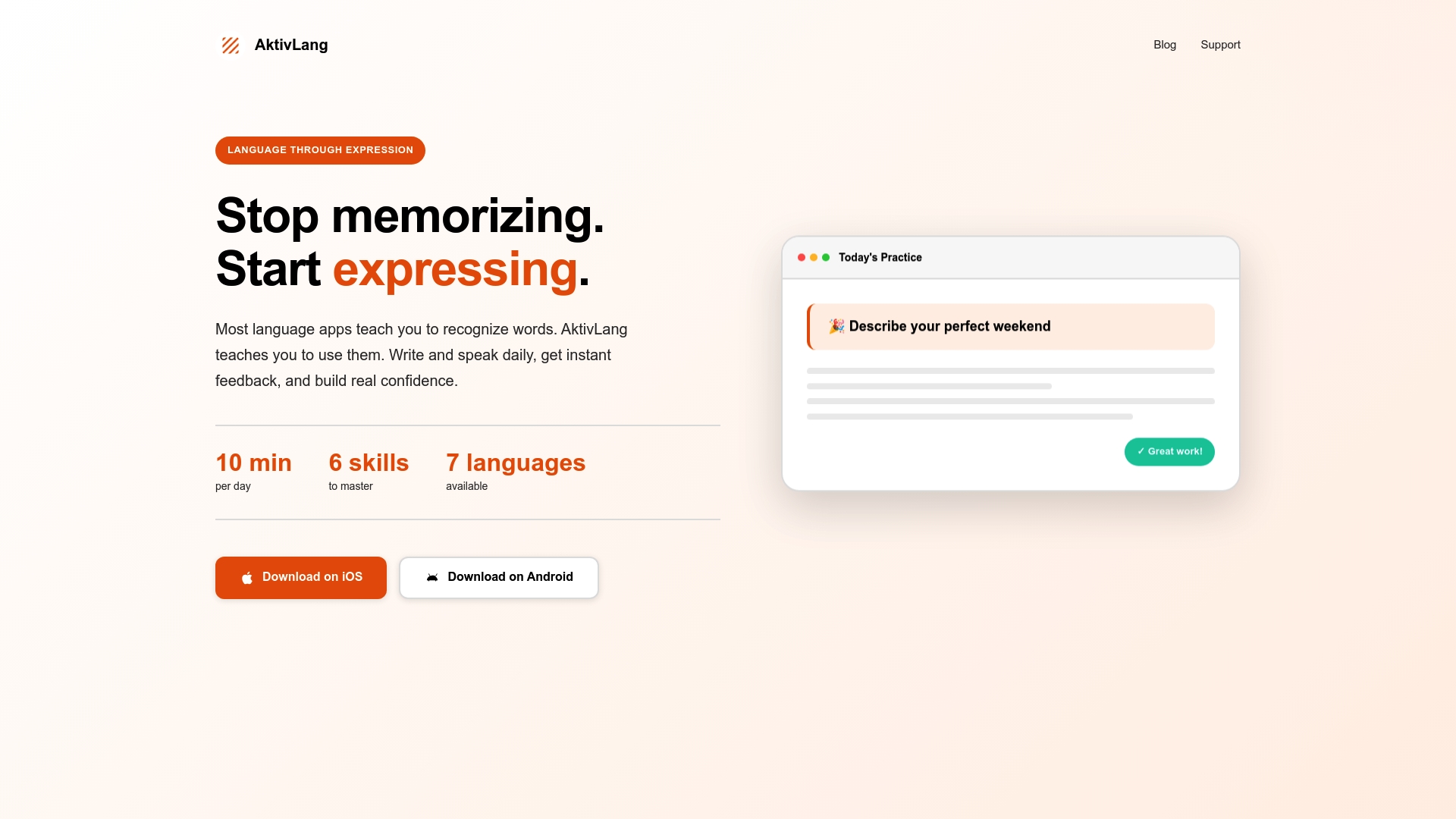
AktivLang is built specifically for intermediate learners who want more than passive reading. With story-based reflection tools built into every session, you can read engaging stories in French, Spanish, German, Dutch, Italian, or Portuguese, then immediately practice with 12+ exercise types covering vocabulary, grammar, speaking, and comprehension. AI-powered speaking feedback gives you the pronunciation data you'd otherwise only get from a private tutor. Follow a step-by-step story learning workflow that puts everything in this article into action, session by session.
Frequently asked questions
What is the most effective reflection activity for improving pronunciation?
Recording yourself after story-based exercises and listening back has strong research support. Post-story recording and review increases pronunciation accuracy by helping you hear patterns you miss in real time.
How often should I repeat the same story for reflection?
Story-based reading: repetition vs. varied stories shows that lower intermediates benefit from repeating the same story several times, while higher intermediates progress faster with a variety of new stories.
Does reflection help build grammar naturally?
Yes, particularly when you use story retelling and grammar noticing tasks. Story grammar explicit instruction yields significant comprehension gains and is more effective than isolated grammar drills for building natural usage.
Can digital storytelling tools support language learning reflection?
Absolutely. Digital storytelling benefits include multimodal feedback, higher engagement, and measurable gains in vocabulary and listening that outperform conventional instruction methods.