

Most language learners believe motivation is something you either have or don't have, a fixed trait that determines success. Research reveals motivation is actually a dynamic system you can actively shape and strengthen. Understanding the science behind language learning motivation unlocks powerful strategies to enhance your speaking and comprehension skills through engaging stories and interactive exercises. This article breaks down key motivation theories, shows how they drive real progress, and provides practical frameworks to help you visualize and reach your language goals with evidence-based techniques.
Table of Contents
- Understanding Key Language Learning Motivation Theories
- How Motivation Drives Language Learning Progress: Mechanisms And Evidence
- Applying Motivation Theories: Using Stories And Interactive Exercises
- Navigating Challenges And Nuances In Language Motivation Research
- Discover AktivLang: Your Partner In Motivated Language Practice
Key takeaways
| Point | Details |
|---|---|
| L2 Motivational Self System | Explains motivation through your ideal future self, social expectations, and learning experiences |
| Ideal self drives effort | Strong correlation exists between visualizing your proficient language self and actual speaking gains |
| Intrinsic motivation matters | Current theories emphasize enjoyment and personal meaning over external pressure for sustained progress |
| Stories enhance motivation | Engaging narratives create emotional connections that make vocabulary stick and goals feel achievable |
| Practical frameworks work | Visualization techniques and milestone tracking help you maintain motivation and measure improvement |
Understanding key language learning motivation theories
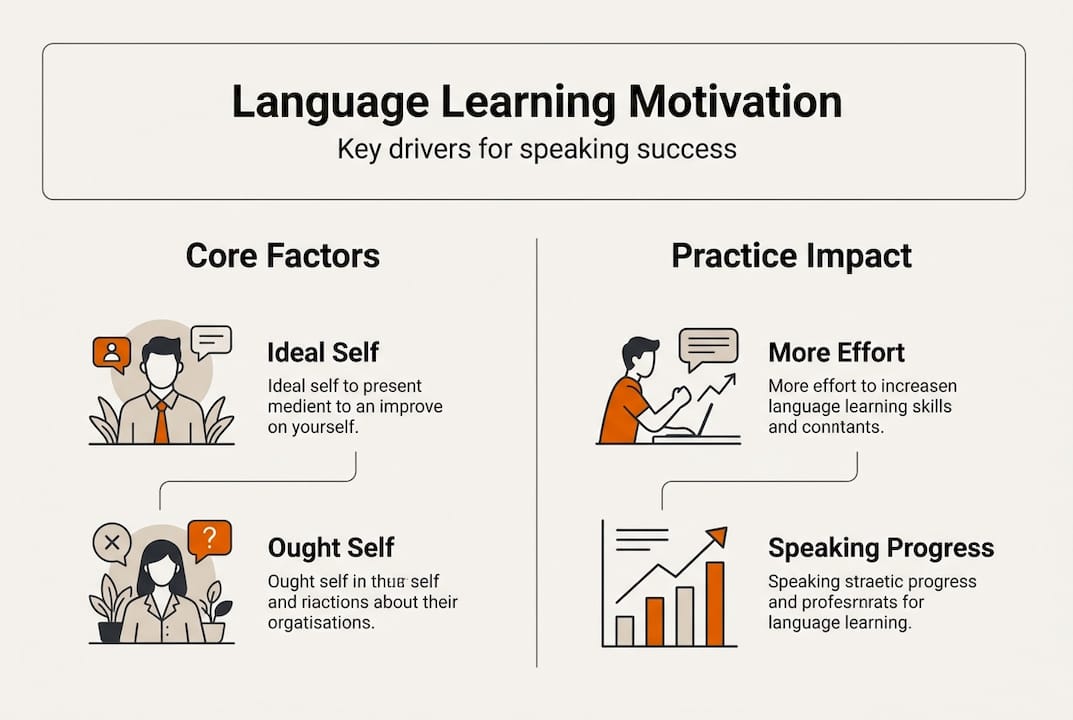
The dominant framework explaining language learning motivation is Dörnyei's L2 Motivational Self System (L2MSS), which breaks motivation into three interconnected components. The Ideal L2 Self represents your vision of yourself as a proficient language user, the person you want to become. The Ought-to L2 Self captures external expectations from family, employers, or society about your language abilities. The L2 Learning Experience encompasses your immediate classroom environment, teacher quality, peer interactions, and success experiences.
These three elements work together to create your overall motivation profile. If you clearly envision yourself confidently ordering food in Paris or negotiating business deals in Madrid, that Ideal L2 Self pulls you forward. When your boss expects you to handle German clients or your parents want you to maintain heritage language skills, the Ought-to L2 Self pushes from behind. Your daily learning experiences either fuel or drain these motivational forces.
Recent critiques highlight L2MSS measurement issues and suggest alternatives like Self-Determination Theory (SDT). SDT focuses on intrinsic motivation, the drive that comes from genuine interest and enjoyment rather than external rewards or obligations. This framework emphasizes three psychological needs: autonomy (feeling in control of your learning), competence (experiencing progress and mastery), and relatedness (connecting with others through the language).
| Framework | Core Focus | Key Strength | Main Limitation |
|---|---|---|---|
| L2 Motivational Self System | Future self-images and context | Links identity to language goals | Measurement validity concerns |
| Self-Determination Theory | Intrinsic motivation and needs | Emphasizes enjoyment and autonomy | Less specific to language learning |
Understanding these theoretical foundations helps you recognize what truly drives your language practice. The language learning blog explores how different motivational approaches affect real learner outcomes. When you know whether you're motivated by an exciting future self, external obligations, or pure enjoyment, you can design practice routines that align with your actual drivers rather than fighting against them.
How motivation drives language learning progress: Mechanisms and evidence
Motivation doesn't just make you feel good about learning, it directly causes measurable improvement in speaking skills. The mechanism works through self-discrepancy theory: the gap between your current abilities and your Ideal L2 Self fuels effort to close that distance. When you vividly imagine yourself conducting job interviews in Spanish or chatting with locals in Italian cafes, the psychological discomfort of not being there yet drives you to practice more intensely and consistently.
A comprehensive meta-analysis confirmed the Ideal L2 Self strongly correlates with intended learning effort across multiple studies and contexts. Learners with clear, compelling visions of their future language-using selves consistently invest more time in practice and persist through difficulties. This isn't just correlation. Longitudinal research tracking learners over 18 months demonstrated that motivation causally drives speech proficiency gains, not the other way around.
The evidence gets more specific. Students who scored higher on Ideal L2 Self measures at the beginning of a study showed significantly greater improvements in pronunciation accuracy, fluency, and overall speaking confidence 1.5 years later. The relationship held even after controlling for initial proficiency, previous language learning experience, and time spent studying. Motivation predicted who would actually improve their speaking skills in real-world conditions.
"Motivation through enjoyment and positive emotion creates a virtuous cycle where practice feels rewarding, leading to more practice and faster skill development in speaking tasks."
This finding has practical implications for your daily practice. Instead of forcing yourself through boring drills out of obligation, you'll make faster progress by choosing activities that genuinely interest you and align with your language identity goals. The conversation practice tips show how enjoyable interaction accelerates speaking gains more effectively than rote memorization.
The causal chain works like this: strong Ideal L2 Self increases intended effort, which leads to more actual practice time, which produces measurable speaking improvements, which reinforces your belief in your future proficient self. Breaking this chain at any point undermines the whole system. You need both the compelling vision and the engaging practice methods that make following through feel natural rather than forced.

Applying motivation theories: Using stories and interactive exercises
Theory becomes useful only when translated into concrete practice techniques. Building a powerful Ideal L2 Self starts with visualization, but not vague daydreaming. You need specific, sensory-rich scenarios where you use your target language successfully. Close your eyes and imagine the exact restaurant where you're ordering in French, the conference room where you're presenting in German, or the marketplace where you're bargaining in Portuguese.
- Write a detailed paragraph describing yourself using the language fluently in a situation you care about, including sensory details like sounds, emotions, and surroundings.
- Identify three specific language skills this future self possesses (smooth pronunciation of tricky sounds, confident use of past tenses, ability to tell engaging stories).
- Connect each skill to a personal value or goal (professional advancement, cultural connection, travel freedom) to strengthen intrinsic motivation.
- Create a visual reminder (photo, drawing, or object) that represents this Ideal L2 Self and place it where you practice.
- Review and refine your vision monthly as you progress, making it more detailed and ambitious.
Interactive exercises that tie language learning to personal identity work because they activate both cognitive and emotional systems simultaneously. When you read a story about Greek mythology in your target language, you're not just learning vocabulary. You're experiencing the language as a vehicle for ideas that interest you, building associations between the language and meaningful content. This approach leverages stories and interactive exercises to vividly enhance your Ideal L2 Self.
Prioritize intrinsic motivation by choosing practice materials that genuinely fascinate you rather than what someone else says you should study. If you love cooking, practice with recipe videos and food blogs. If you're into sports, follow teams and read match reports. The writing practice workflow demonstrates how personal topics increase engagement and retention compared to generic textbook exercises.
Pro Tip: Set weekly milestones that connect directly to your Ideal L2 Self rather than arbitrary metrics. Instead of "study 30 minutes daily," aim for "successfully order coffee using only the target language" or "understand the main plot of a short story without translation." These concrete achievements make your future self feel closer and more achievable.
The key is creating practice routines where motivation and skill-building reinforce each other. When exercises feel relevant to your goals and enjoyable in the moment, you naturally practice more. More practice builds competence, which strengthens your belief in reaching your Ideal L2 Self, which increases motivation. This positive feedback loop explains why some learners make rapid progress while others stall despite similar time investment.
Navigating challenges and nuances in language motivation research
The motivation research field is currently grappling with significant measurement and conceptual challenges. Multiple studies have found that L2MSS scales show low validity and reliability across different contexts and populations. The same questionnaire items produce different results depending on cultural background, learning environment, and even how questions are worded. This creates problems when trying to apply research findings to your individual situation.
Common critiques of current motivation measurement include:
- Survey items conflate different types of motivation, making it unclear what's actually being measured
- Cultural assumptions embedded in scales don't translate well across different educational systems
- Ideal and Ought-to selves overlap more than theory predicts, suggesting they're not truly distinct constructs
- Temporal stability is questionable, with motivation profiles shifting rapidly in response to experiences
Alternative frameworks focusing on intrinsic factors offer different insights. Self-Determination Theory suggests that supporting autonomy, competence, and relatedness matters more than crafting elaborate future self-images. From this perspective, you'd focus on choosing your own learning materials, tracking concrete progress, and connecting with other learners or native speakers rather than spending time on visualization exercises.
Special contexts like study abroad reveal how motivation profiles shift dramatically when learning environments change. Students who were primarily Ought-to motivated (studying because of external expectations) often develop stronger Ideal L2 Selves after immersion experiences. The promotion-focused aspect of the Ideal Self, the drive to achieve positive outcomes, links directly to pragmatic language gains through increased social contact and risk-taking in conversations.
| Context | Dominant Motivation Type | Primary Outcome | Key Mechanism |
|---|---|---|---|
| Traditional classroom | Ought-to L2 Self | Test performance | External accountability |
| Study abroad | Ideal L2 Self (promotion) | Pragmatic speaking skills | Social contact and identity |
| Self-directed learning | Intrinsic motivation | Long-term persistence | Autonomy and enjoyment |
| Professional requirement | Mixed (Ideal + Ought-to) | Task-specific competence | Goal clarity and necessity |
These nuances matter for practical application. If you're learning in a classroom, don't assume research on study abroad students applies to you. If you're self-studying, frameworks emphasizing intrinsic motivation and autonomy probably fit better than those focused on future self-images. The language motivation research blog helps you interpret findings based on your specific learning context.
The field is moving toward more sophisticated models that acknowledge motivation as dynamic, context-dependent, and multi-dimensional. Rather than trying to fit yourself into one theoretical box, observe what actually increases your practice time and engagement. Your personal motivation system might blend elements from multiple theories, and that's perfectly fine. The goal is understanding what works for you, not perfectly matching a research model.
Discover AktivLang: Your partner in motivated language practice
Understanding motivation theory is valuable, but applying it requires the right tools and practice environment. AktivLang transforms motivation science into engaging language practice by combining compelling stories with interactive exercises that activate your Ideal L2 Self. Instead of drilling isolated vocabulary that feels disconnected from your goals, you read stories about topics you actually care about, then practice through exercises that make learning feel like progress toward your future proficient self.
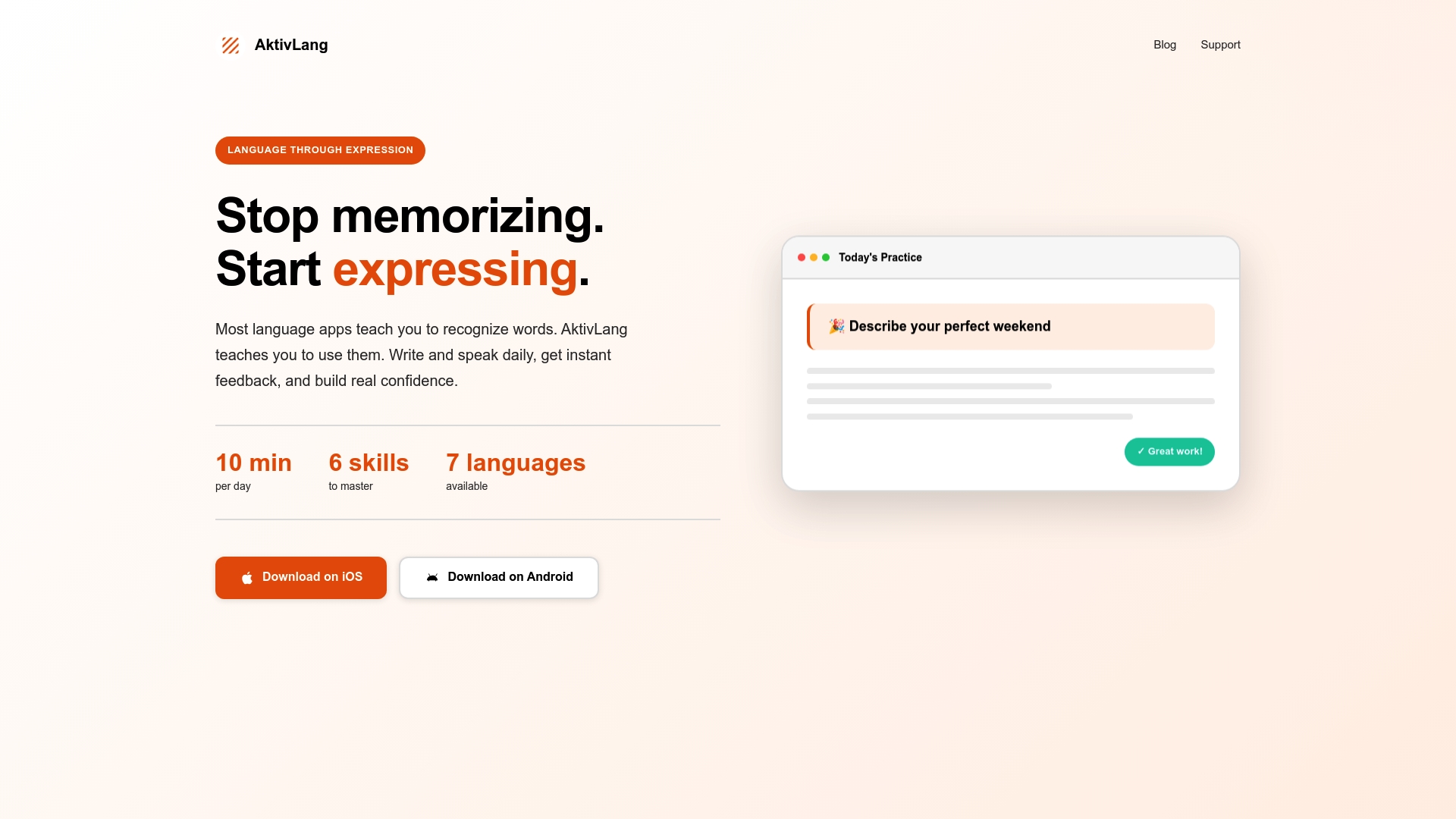
The platform supports your motivation through autonomy (choose themes that interest you), competence (track concrete improvements across vocabulary, grammar, and speaking), and relatedness (engage with meaningful content that connects you to the culture). Whether you're visualizing yourself confidently navigating Paris, conducting business in Barcelona, or connecting with family in Portugal, AktivLang provides the practice structure that turns that vision into reality through consistent, enjoyable engagement with your target language.
FAQ
What is the Ideal L2 Self and why does it matter?
The Ideal L2 Self is your vision of yourself as a proficient, confident user of your target language in situations that matter to you personally. It matters because research shows this future self-image directly drives how much effort you invest in practice and predicts actual speaking improvement over time. When you clearly imagine yourself successfully using the language, the gap between current and ideal creates productive discomfort that motivates consistent practice.
How can stories and interactive exercises improve my motivation?
Stories create emotional connections between the language and content you care about, making vocabulary memorable and practice enjoyable rather than tedious. Interactive exercises transform passive reading into active skill-building, giving you immediate feedback that demonstrates progress toward your goals. This combination activates both intrinsic motivation (genuine interest and enjoyment) and your Ideal L2 Self (seeing yourself successfully using what you've learned), creating a reinforcing cycle where practice feels rewarding.
What are common pitfalls in measuring language learning motivation?
Current dominant measurement scales often show low validity and reliability, meaning they don't consistently measure what they claim to measure across different learners and contexts. The distinction between intrinsic motivation (learning for enjoyment) and extrinsic motivation (learning for external rewards or obligations) frequently gets blurred in questionnaires, making results difficult to interpret. Cultural assumptions embedded in survey items may not translate well, and motivation profiles can shift rapidly, making single-time measurements unreliable for predicting long-term outcomes.
Does study abroad automatically increase language motivation?
Study abroad doesn't automatically increase motivation, but it often shifts motivation profiles in productive ways. Students who were primarily motivated by external expectations (Ought-to L2 Self) frequently develop stronger personal visions of themselves as language users (Ideal L2 Self) through immersion experiences. The promotion-focused aspect of this Ideal Self, seeking positive outcomes and opportunities, links to pragmatic speaking gains through increased social contact and willingness to take conversational risks with native speakers.